
Hydroxi System
The Hydroxi cell. Designed to keep flowing.
[Pending sign-off]
The system
What the Hydroxi System is
The Hydroxi System generates oxyhydrogen – a mixture of hydrogen (H₂) and oxygen (O₂) – from distilled water, for introduction into an engine’s intake air. At its centre is the Hydroxi cell, an electrochemical cell in which an electric current separates water into its two gases.
[Pending sign-off]
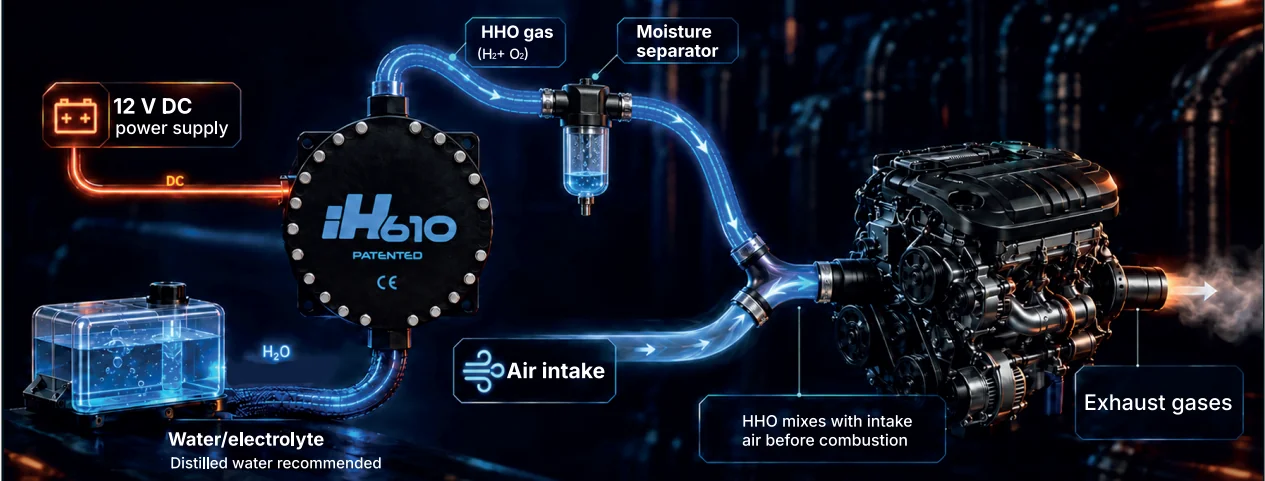
What is HHO?
HHO, also called oxyhydrogen, is a mixture of hydrogen and oxygen gas made by passing an electric current through water. This process is called electrolysis: 2H₂O → 2H₂ + O₂. Every two molecules of water give two molecules of hydrogen and one of oxygen. HHO is a gas mixture, not a single “HHO” molecule. Hydrogen is flammable across a wide range of concentrations and burns once it reaches its self-ignition temperature. That is why the Hydroxi System makes the gas on demand, only while the system is running, instead of storing it.
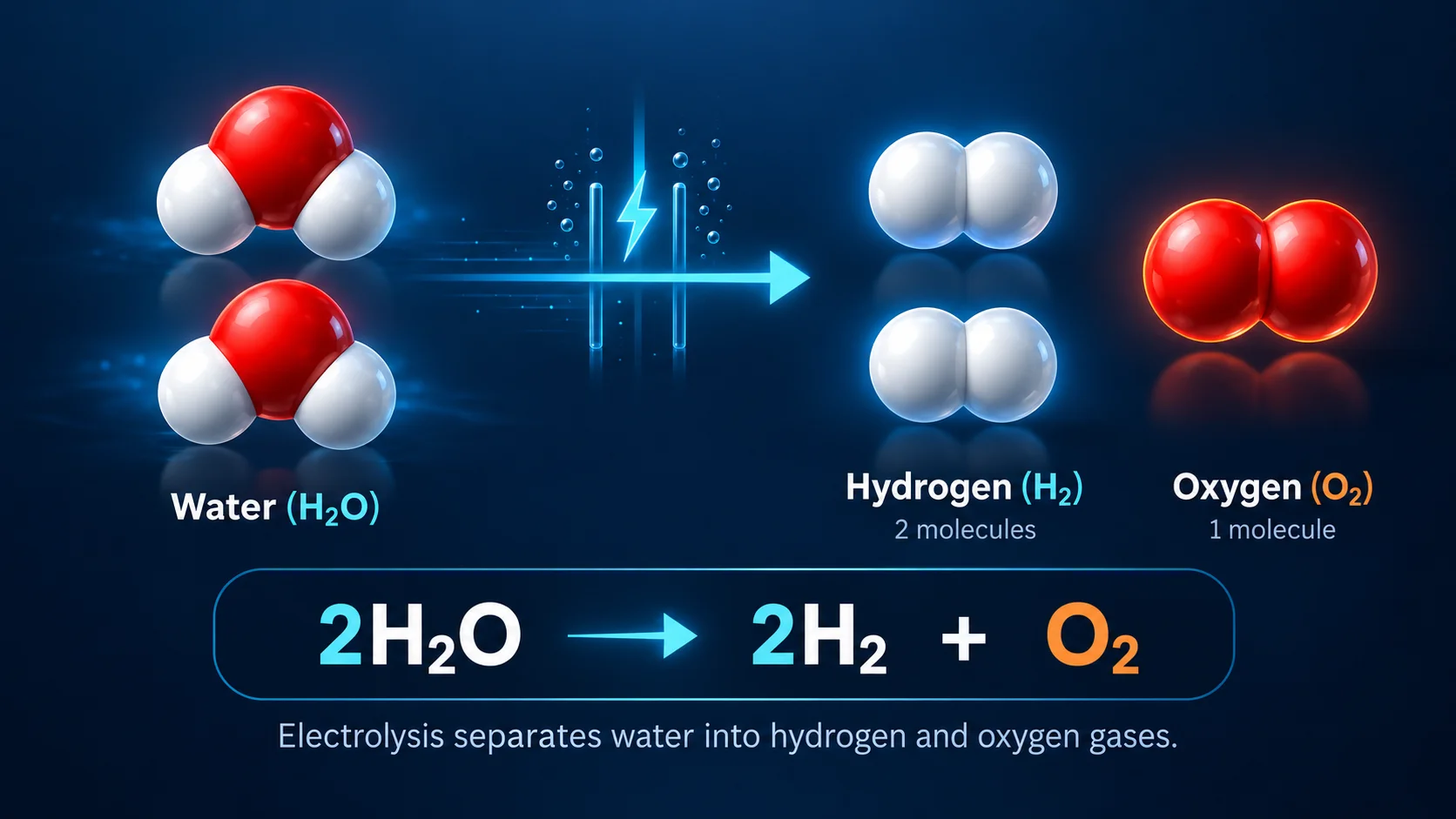
Inside the cell
Inside the cell: how the gas is generated
The cell has a positive electrode (anode), a negative electrode (cathode) and, between them, a set of neutral plates marked N. The neutral plates aren’t wired to anything. When the two electrodes are energised, each neutral plate takes on a negative charge on one face and a positive charge on the other. The cell then works as a row of smaller cells side by side, with hydrogen forming on the negative faces and oxygen on the positive faces.
Pure water conducts electricity poorly, so a small, controlled amount of potassium hydroxide (KOH) is dissolved in the distilled water before it goes into the tank. This electrolyte lets the current pass through the water.
Current through each cell is held at about 6 to 7 amps. Keeping it there avoids an unnecessary rise in temperature and supports a consistent, good-quality gas output. The cell walls are made of PA12, a semi-crystalline thermoplastic.
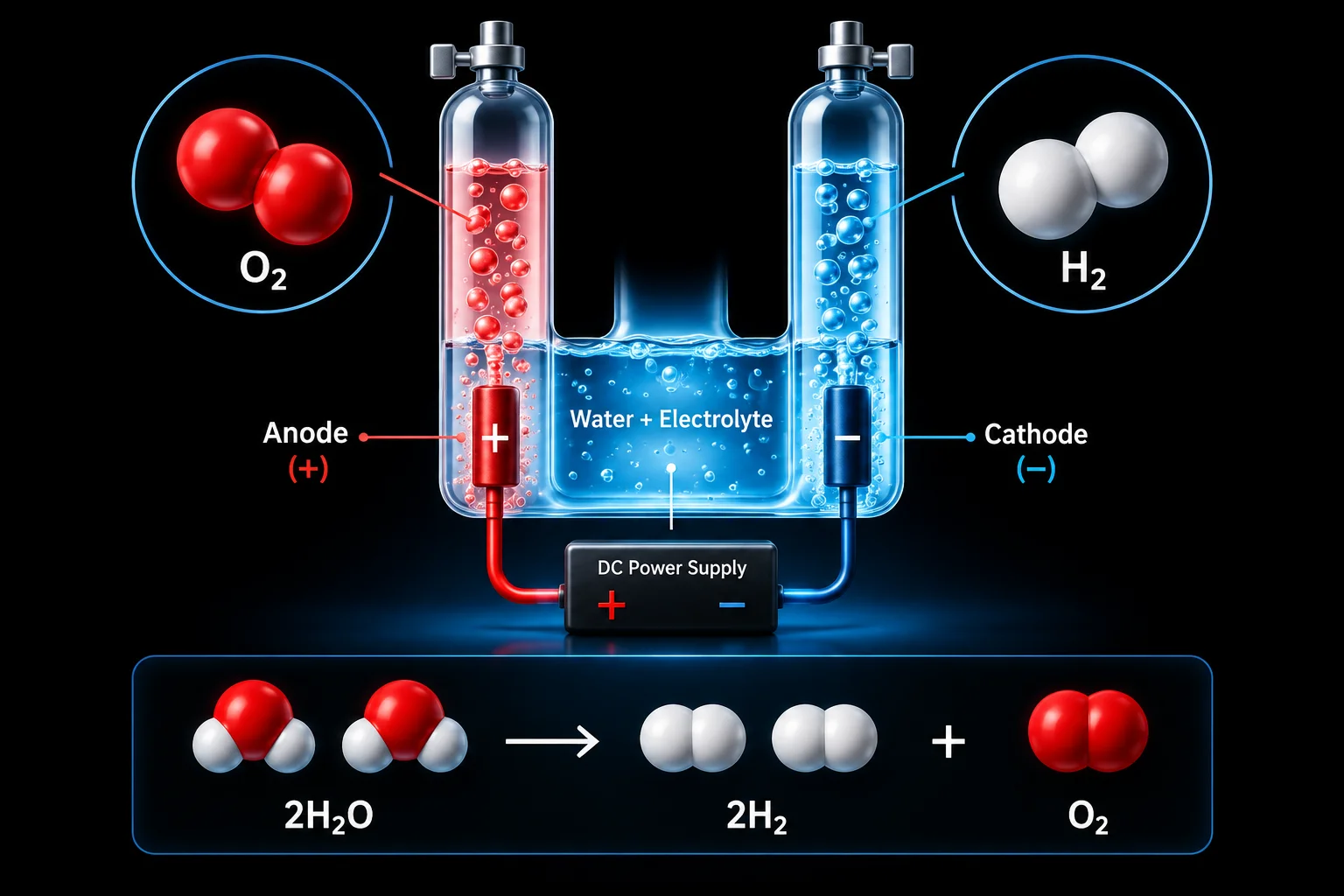
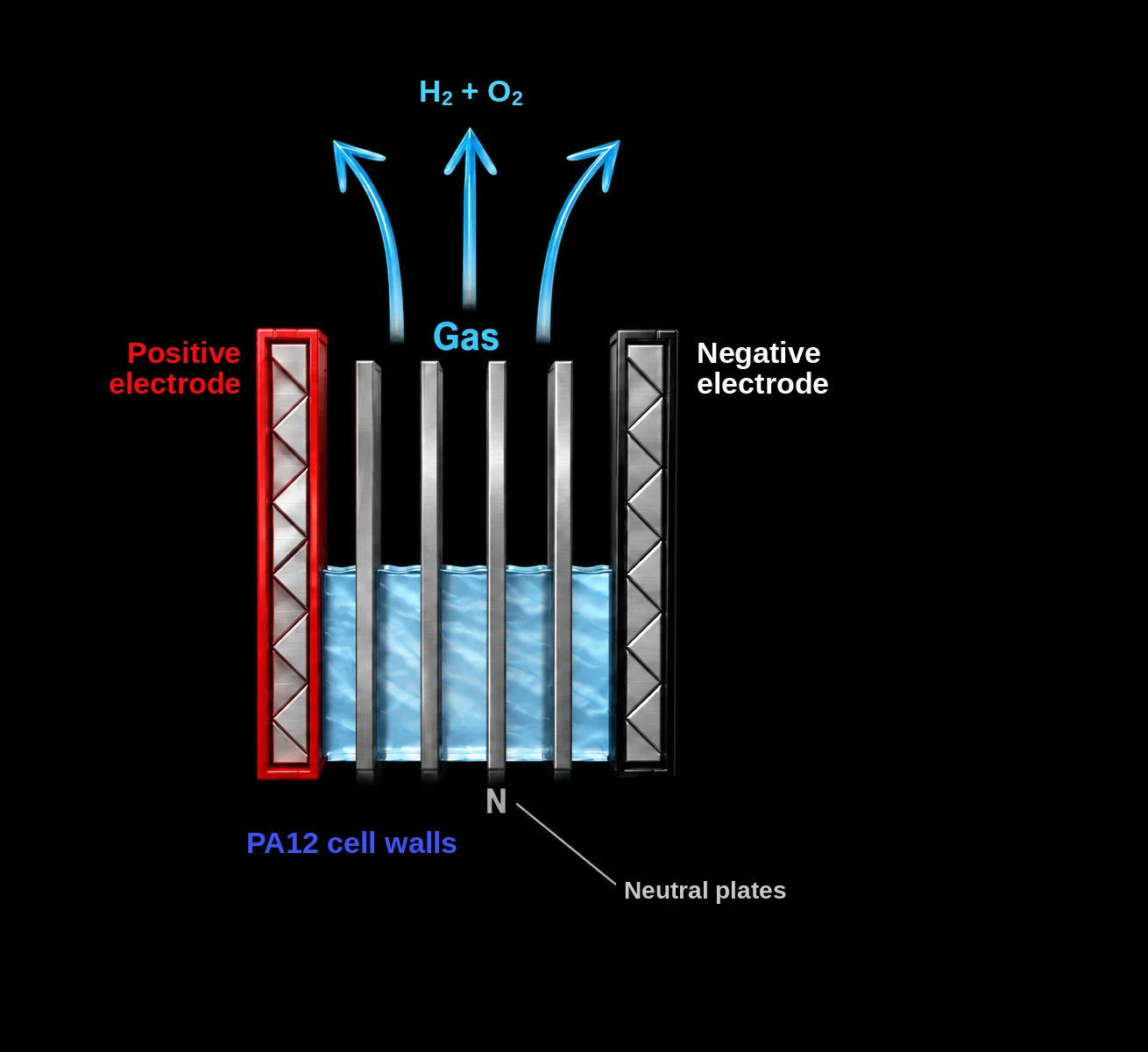
Cell design
Why cell design matters
Electrolysis is simple in principle. Doing it consistently, hour after hour in an engine bay, depends on how the cell is built.
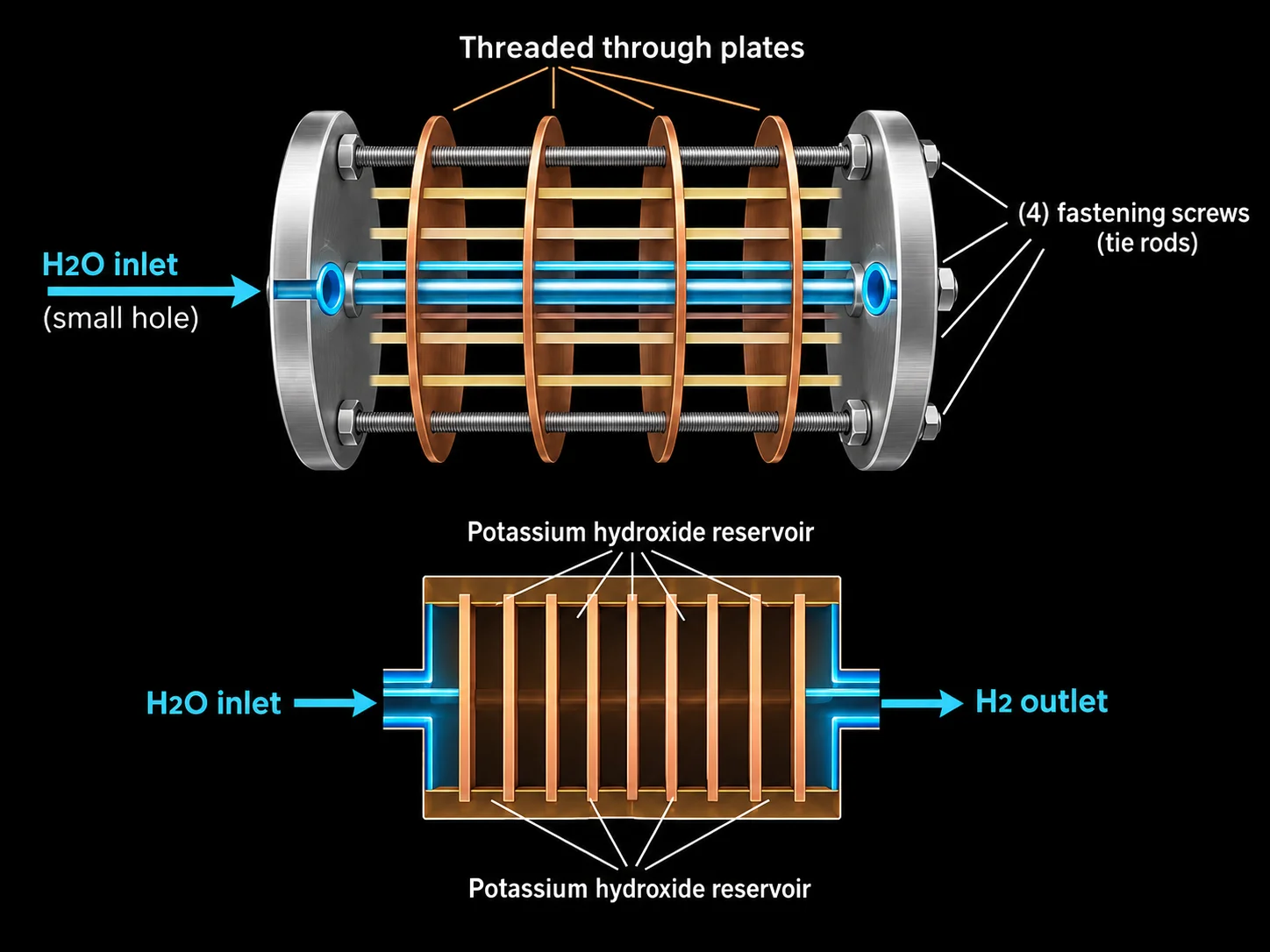
In many conventional cells, water enters through a single small tube, and the shape of the plates leaves pockets where the potassium hydroxide solution sits still instead of circulating. These stagnant pockets heat up, and the extra heat produces more water vapour. The result is that water vapour is carried along with the hydrogen into the engine’s intake duct, instead of clean gas.
Many of these cells are also built as a stack of plates clamped together with tie rods, and the stack has to stay perfectly aligned to avoid leaks.
The Hydroxi cell needs relatively little electrolyte to keep gas production steady.
Manufacturer testing
Thermal analysis of the iH610 HHO cell
[Pending sign-off]
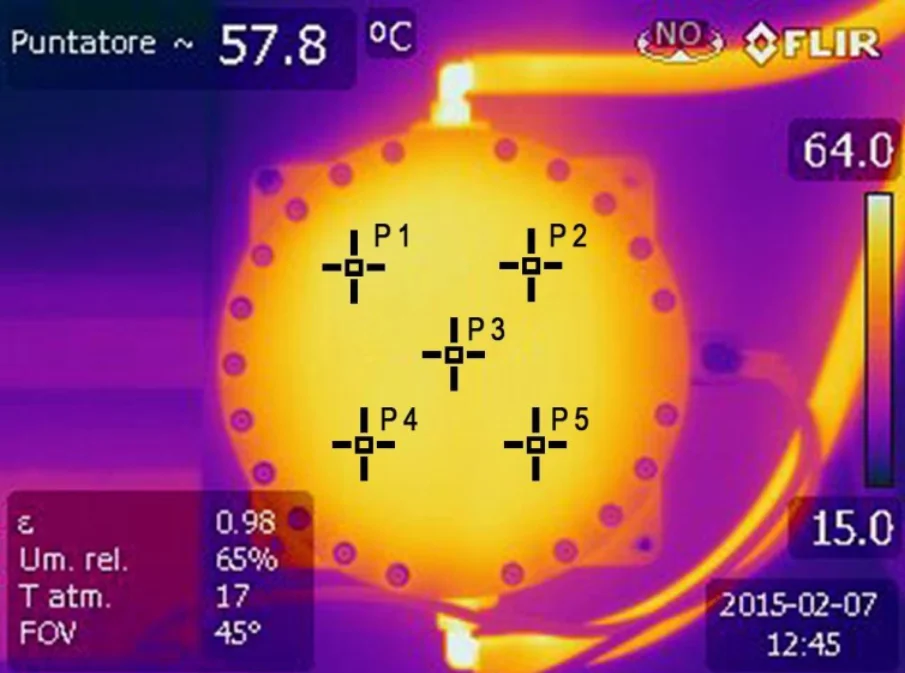
Stagnation inside a cell shows up as heat, because trapped electrolyte and gas raise the temperature locally. To check for it, the manufacturer ran a thermographic analysis on a prototype of the iH610 HHO cell after 4 hours of operation at 14.8 V and 20 A, using a FLIR 440BX thermal camera. The table shows the readings at five points. They sit within 0.5 °C of each other, which shows an even internal temperature, and no stagnation zones were detected.
| Measured point | Temperature |
|---|---|
| P1 | 57.4 °C |
| P2 | 57.3 °C |
| P3 | 57.8 °C |
| P4 | 57.5 °C |
| P5 | 57.4 °C |
FLIR thermal image of a prototype iH610 cell after 4 hours at 14.8 V / 20 A. Ambient temperature 17 °C, 7 February 2015. Manufacturer-reported test.
Configuration
Set up for your engine
[Pending sign-off]
Every engine draws a different volume of air. A four-stroke engine takes in roughly half its displacement for every revolution – a 2-litre engine at 3,000 rpm draws about 3 m³ of air a minute. That is why the system is configured per engine: the electrolyte concentration is set during installation to reach the current and gas output the specific engine needs.
Not sure whether your engine qualifies? Verify Compatibility before you go further.
Specification
Technical specification
| Item | Specification |
|---|---|
| Model | [Pending sign-off] |
| Type | Electrochemical oxyhydrogen (H₂ + O₂) cell – water electrolysis |
| Electrolyte | Potassium hydroxide (KOH), dissolved in distilled water before filling. Sodium hydroxide (NaOH) is an alternative listed by the manufacturer. |
| Electrolyte concentration | Set at installation to reach the current/output required for the engine |
| Reservoir fill level | About half full; never above 50–60% |
| Kit contents | [Pending sign-off] |
| Engine range | [Pending sign-off] |
| Thermal test | [Pending sign-off] |
| Materials, dimensions, mass, current range | [Content to come] |
Comparison
Conventional cell vs the Hydroxi cell
| Conventional cell (as described by the manufacturer) | Hydroxi cell (design intent / manufacturer-reported) | |
|---|---|---|
| Electrolyte flow | Water fed through a small tube; plate shape leaves zones where electrolyte stagnates | [Pending sign-off] |
| Temperature | Stagnant zones cause localised temperature rises | [Pending sign-off] |
| Gas leaving the cell | [Pending sign-off] | [Pending sign-off] |
| Deposits and corrosion | [Pending sign-off] | [Pending sign-off] |
| Construction | [Pending sign-off] | [Content to come] |
| Electrolyte needed | – | Manufacturer reports relatively little electrolyte is needed for steady production |
Comparison based on the manufacturer’s technical documentation. Hydroxi-cell entries describe design intent and manufacturer-reported results, not independent test results.